The franchise industry in the Philippines continues to evolve in 2026. While food businesses still dominate the market, entrepreneurs are becoming more strategic about where they invest. Rising operational costs, changing consumer behavior, digital technology, and lifestyle shifts are reshaping what successful franchises look like today.
Compared to previous years, investors are now prioritizing:
- Lower startup costs
- Faster ROI
- Flexible business models
- Strong operational support
- Digital-friendly concepts
According to industry reports, Philippine franchising is still projected to grow steadily this year despite economic pressures, with food, retail franchise, and wellness sectors remaining resilient.
If you’re planning to invest in a franchise, these are the biggest trends shaping the Philippine market in 2026.
1. Affordable Micro-Franchises Are Growing Fast
One of the strongest trends in 2026 is the rise of micro-franchises—small businesses with lower startup costs and simpler operations.
Instead of investing millions into large restaurants, many Filipinos are choosing:
- Food franchises/carts
- Milk tea kiosks
- Fries and siomai stalls
- Small coffee counters
- Takeout-only food concepts
This shift is largely driven by practicality. With economic uncertainty and higher rental costs, entrepreneurs want businesses that are easier to manage and quicker to recover investments from.
Industry reports show increasing demand for franchise packages in the ₱100,000–₱500,000 range.
These businesses may be smaller, but they can still generate strong daily cash flow when placed in high-traffic areas.
2. Coffee Franchises Continue to Expand

Coffee culture in the Philippines is stronger than ever.
What used to be a luxury purchase has become a daily habit for students, office workers, freelancers, and remote employees. Because of this, coffee franchises continue to grow aggressively across malls, commercial districts, and even smaller cities.
Large players are expanding further into the coffee market. In fact, Jollibee Foods Corporation recently announced plans to launch the South Korean brand Compose Coffee in the Philippines this 2026, highlighting how important the coffee segment has become.
Many café franchises are now focusing on:
- Smaller store footprints
- Grab-and-go formats
- Delivery-friendly menus
- Affordable coffee pricing
This allows brands to expand faster while keeping operational costs manageable.
3. Digital-First Franchise Operations Are Becoming Standard

Franchises in 2026 are no longer relying purely on walk-in customers.
Businesses are investing heavily in:
- Delivery apps
- QR ordering systems
- Cashless payments
- Loyalty apps
- Digital marketing
Many restaurant owners are also improving inventory tracking and operations through POS systems and automation. Discussions online among Filipino business owners increasingly emphasize digital transformation as essential for survival in the modern food industry.
Customers now expect convenience. Franchises that adapt to digital behavior tend to stay competitive longer.
4. Wellness & Beauty Franchises Are Expanding

Health, beauty, and wellness businesses are seeing rapid growth in 2026.
Consumers are spending more on:
- Skincare
- Aesthetic treatments
- Massage and recovery services
- Fitness and wellness programs
Globally, wellness-focused franchise models are trending toward recurring membership-based revenue systems and preventive health services.
In the Philippines, this trend is fueled by:
- Social media influence
- Increased self-care awareness
- Young professionals with higher spending power
Wellness businesses often benefit from repeat customers, making them attractive long-term investments.
5. Smaller Store Formats Are Replacing Large Spaces

Large dine-in spaces are no longer the only path to success.
More franchises are shifting toward:
- Compact kiosks
- Food containers
- Cloud kitchens
- Takeout-focused setups
Global franchise experts note that “micro footprints” and modular store concepts are becoming increasingly popular because they reduce rent and staffing costs.
In the Philippines, rising mall rental rates and operational expenses are pushing entrepreneurs toward smaller, more efficient business models.
This trend also allows brands to expand into more locations faster.
6. Essential-Service Franchises Are Becoming More Attractive

Not every investor wants a trend-driven business.
In 2026, more entrepreneurs are exploring essential-service franchises such as:
- Laundry shops
- Water refilling stations
- Convenience stores
- Cleaning services
These businesses benefit from recurring demand regardless of economic conditions.
Industry analysts also expect affordable and necessity-based franchises to remain resilient during slower economic periods.
For many investors, stability now matters just as much as growth potential.
7. Franchise Investors Are Becoming More Careful

Another major trend in 2026 is smarter due diligence.
Filipino investors are becoming more cautious about:
- Franchise fees
- Profit margins
- Renewal costs
- Supply pricing
- Operational support
Online discussions among franchise investors show growing concern about weak support systems and unrealistic income projections from some brands.
As a result, more entrepreneurs are:
- Talking to existing franchisees
- Comparing multiple brands
- Reviewing contracts carefully
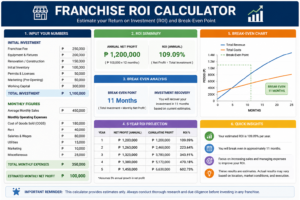
- Calculating ROI before investing
This is ultimately a positive shift for the industry because it encourages transparency and better franchise systems.
8. ASEAN Expansion Is Becoming a Bigger Focus
The Philippine franchise industry is no longer focused only on local growth.
Franchise Asia Philippines 2026 highlighted ASEAN expansion and cross-border opportunities as major priorities for the industry.
More Filipino brands are now exploring expansion into:
- Southeast Asia
- The Middle East
- International Filipino communities abroad
At the same time, international brands continue entering the Philippine market because of the country’s strong consumer culture and franchise-friendly environment.
Final Thoughts
The franchise industry in the Philippines is becoming more practical, digital, and efficiency-driven in 2026.
Instead of focusing purely on large, expensive concepts, many entrepreneurs are prioritizing:
- Lower-risk investments
- Flexible store formats
- Daily essential services
- Strong operational systems
Food and beverage franchises still dominate, but newer opportunities in wellness, digital-first operations, and essential services are gaining momentum quickly.
For aspiring franchisees, the biggest takeaway is this:
The best franchise in 2026 isn’t necessarily the biggest brand—it’s the one that fits your budget, market, and long-term goals.
Doing proper research, evaluating profitability carefully, and choosing brands with strong support systems will matter more than ever in today’s franchise landscape.