Franchising is one of the most popular ways to start a business in the Philippines, but if you’re new to it, you probably have a lot of questions.
That’s completely normal.
From costs and profits to legal requirements and daily operations, understanding how franchising works can help you avoid expensive mistakes and make smarter decisions.
This guide answers the most common franchise questions in a clear, practical, and human way—so you can move forward with confidence.
What Is a Franchise?

A franchise is a business model where you (the franchisee) operate a business using another company’s brand, products, and system (the franchisor).
Instead of starting from zero, you follow a proven formula, from store design and menu to operations and marketing.
In return, you pay fees and follow their standards.
Think of it as running your own business, but with a guide already in place.
How Much Does It Cost to Start a Franchise?

Franchise costs vary widely depending on the brand and type of business.
Typical Investment Ranges:
- ₱50,000 – ₱300,000: Food carts, small kiosks
- ₱300,000 – ₱1M: Coffee kiosks, laundry, water stations
- ₱1M – ₱5M: Cafés, mid-sized restaurants
- ₱5M+: Fast-food chains and large franchises
Keep in mind, the franchise fee is just one part. You also need to budget for:
- Equipment
- Rent and renovation
- Staff salaries
- Inventory
- Working capital
Always ask for a complete cost breakdown before committing.
What Fees Do Franchisees Pay?

Most franchises involve several types of fees:
Common Franchise Fees:
- Franchise Fee: One-time payment to use the brand
- Royalty Fee: Ongoing percentage of your sales
- Marketing Fee: Contribution to national or regional promotions
- Renewal Fee: Payment when extending your contract
These fees fund the support, training, and branding you receive.
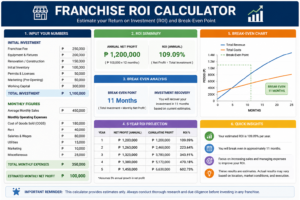
How Long Does It Take to Earn Back My Investment?

This is one of the most important questions—and the honest answer is: it depends.
Most franchises in the Philippines reach break-even within:
- 1–2 years: Small kiosks or carts
- 2–4 years: Cafés, laundry, and mid-sized businesses
- 3–6 years: Large fast-food franchises
Factors that affect ROI:
- Location
- Daily sales volume
- Cost control
- Management efficiency
No franchisor can guarantee profits, so be cautious of unrealistic promises.
Do I Need Business Experience to Start a Franchise?

Not necessarily.
One of the biggest advantages of franchising is that you don’t need prior business experience. Most franchisors provide:
- Pre-opening training
- Operations manuals
- Staff training
- Ongoing support
That said, you still need:
- Basic financial understanding
- Willingness to learn
- Strong work ethic
Franchising makes things easier—but it’s not completely hands-off.
Can I Run a Franchise Part-Time?

It depends on the type of franchise.
More Hands-On:
- Food businesses
- Cafés
- Restaurants
These usually require daily supervision.
More Flexible:
- Laundry services
- Water refilling stations
- Some retail stores
These can be managed with staff and periodic monitoring.
If you plan to run your franchise part-time, choose a model that allows semi-passive operations.
What Are the Risks of Franchising?

Franchising reduces risk—but it doesn’t eliminate it.
Common Risks:
- Poor location
- High operating costs
- Weak management
- Market competition
- Overestimating demand
Even strong brands can fail if execution is poor.
The key is to do your research and plan carefully before investing.
How Do I Choose the Right Franchise?

Choosing the right franchise is about more than just popularity.
Ask Yourself:
- Does it fit my budget?
- Is there demand in my area?
- Do I understand the business model?
- Does the franchisor provide strong support?
Also, try to:
- Visit existing branches
- Talk to current franchisees
- Review the contract carefully
A well-researched decision can save you from costly mistakes.
Do I Need a Good Location?

Yes—location can make or break your franchise.
Even a strong brand may struggle in a low-traffic area.
Good Locations Include:
- Malls and commercial centers
- School zones
- Transport hubs
- Dense residential areas
Your location should match your target market and business type.
What Support Do Franchisors Provide?

A good franchisor provides ongoing support—not just at the start.
Typical Support Includes:
- Training programs
- Store setup assistance
- Marketing campaigns
- Supply chain management
- Regular performance checks
This support is one of the biggest reasons people choose franchising over starting independently.
Is Franchising Worth It?

For many Filipinos, the answer is yes—but only if done right.
Franchising offers:
- Lower risk than starting from scratch
- Faster setup
- Proven systems
But it still requires:
- Effort
- Discipline
- Smart decision-making
It’s not a guaranteed success, but it’s a strong starting point.
Final Thoughts
Franchising can be a powerful way to start your business journey in the Philippines—but it pays to ask the right questions early.
Understanding the costs, risks, and expectations will help you avoid common pitfalls and choose a franchise that fits your goals.
If you’re serious about investing, take your time to:
- Research different brands
- Study your local market
- Evaluate your finances
The more informed you are, the better your chances of building a successful and sustainable business.