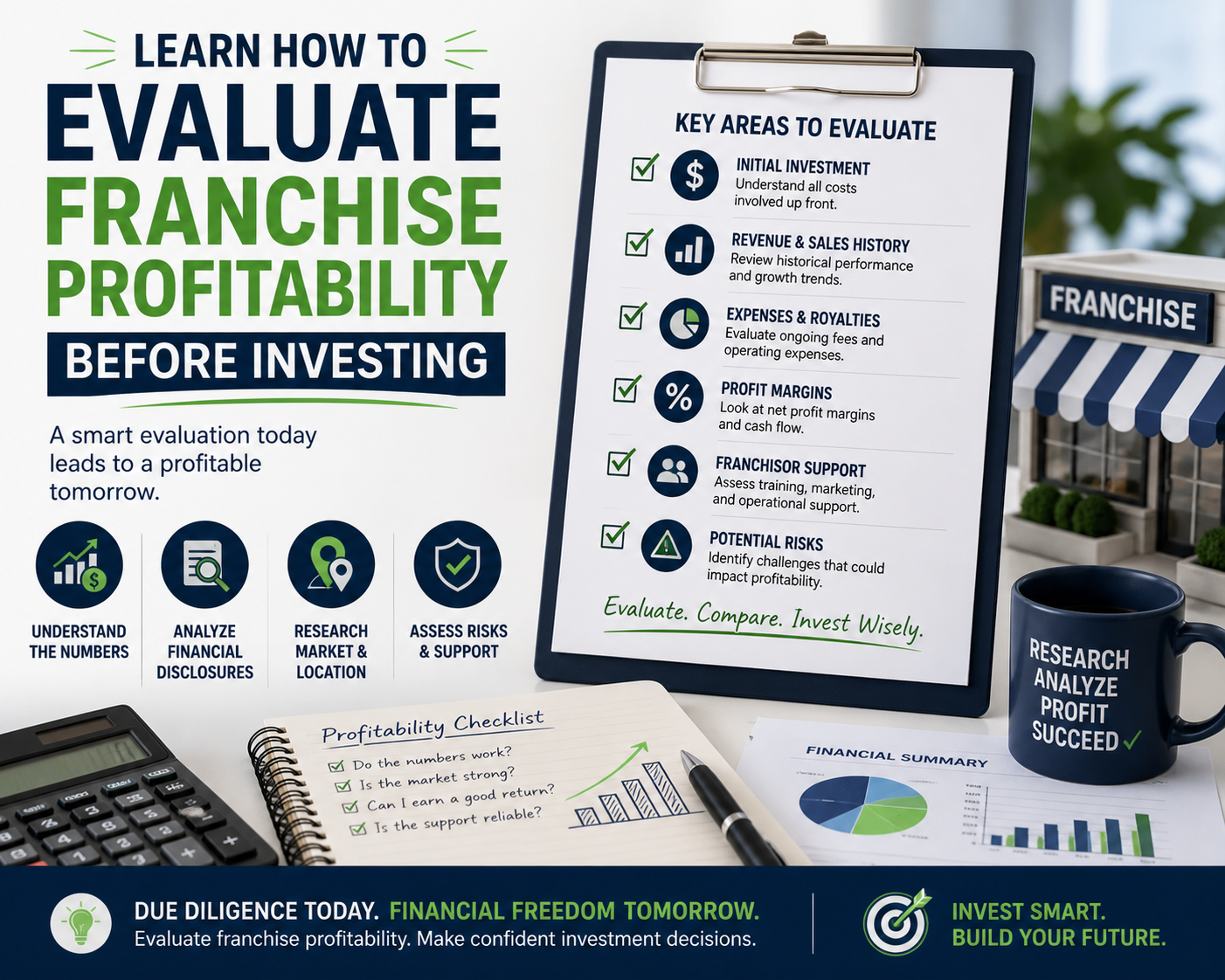
Franchising can be a smart way to start a business—but profitability isn’t guaranteed.
A well-known brand doesn’t automatically mean strong returns. Some franchises look promising on paper but struggle in real-world conditions due to poor location, high costs, or unrealistic expectations.
Before you invest, you need to answer one critical question:
“Will this franchise actually make money?”
This guide walks you through how to evaluate franchise profitability step by step, using practical insights that apply to the Philippine market.
1. Understand the Total Investment (Not Just the Franchise Fee)

One of the biggest mistakes beginners make is focusing only on the franchise fee.
In reality, your total investment includes much more.
What to Include:
- Franchise fee
- Equipment and setup costs
- Store construction or renovation
- Rental deposit and advance
- Initial inventory
- Staff hiring and training
- Permits and licenses
- Working capital (at least 3 months)
For example, a franchise advertised at ₱300,000 might actually require ₱500,000–₱800,000 total.
Knowing your full investment is the first step in calculating profitability.
2. Estimate Your Monthly Expenses

Next, you need to understand how much it costs to keep your business running every month.
Common Monthly Expenses:
- Rent
- Staff salaries
- Utilities (electricity, water, internet)
- Inventory replenishment
- Royalty and marketing fees
- Maintenance and repairs
These franchise business costs will determine how much revenue you need just to break even.
3. Project Your Daily and Monthly Sales

Profitability depends heavily on sales volume.
Ask the franchisor for:
- Average daily sales per branch
- Peak and slow season trends
- Typical number of transactions per day
Then estimate:
Daily Sales × 30 days = Monthly Revenue
Be conservative. It’s better to underestimate sales than overestimate and get disappointed later.
4. Calculate Your Gross and Net Profit

Once you have your estimated revenue and expenses, you can calculate profit.
Basic Formula:
Net Profit = Monthly Revenue – Monthly Expenses
Also consider:
- Cost of goods sold (ingredients, supplies)
- Franchise royalties
- Unexpected expenses
A healthy business should leave you with clear profit after all costs, not just break even.
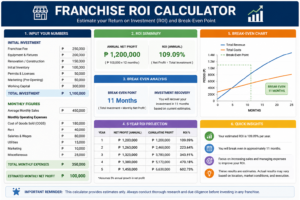
5. Determine the Break-Even Point

Your break-even point tells you how long it will take to recover your investment.
Simple Formula:
Total Investment ÷ Monthly Net Profit = Months to Break Even
Example:
- Investment: ₱600,000
- Monthly profit: ₱50,000
Break-even: 12 months
In the Philippines, typical timelines are:
- 1–2 years: Small kiosks
- 2–4 years: Mid-sized businesses
- 3–6 years: Large franchises
6. Study the Location’s Earning Potential

Even a profitable franchise can fail in the wrong location.
Check:
- Foot traffic
- Nearby competitors
- Customer demographics
- Spending habits
For example:
- High foot traffic = higher potential sales
- Poor visibility = fewer customers
If possible, observe the area at different times of the day.
7. Compare Multiple Franchise Options
Don’t settle for the first franchise you see.
Compare at least 2–3 options based on:
- Investment cost
- Expected revenue
- Profit margins
- Support system
- Brand strength
Sometimes, a lesser-known brand can be more profitable than a big-name franchise with high fees.
8. Talk to Existing Franchisees

This is one of the most important steps—and often overlooked.
Ask current franchise owners:
- How much do they actually earn?
- How long did it take to break even?
- What challenges do they face?
- Is the franchisor supportive?
Real-world insights can reveal things that brochures won’t tell you.
9. Watch Out for Red Flags
Not all franchises are good investments.
Be cautious if:
- Profit claims seem too good to be true
- There’s no clear cost breakdown
- The brand has inconsistent quality
- Support and training are limited
- There are too many branches too close together
If something feels off, take a step back and reassess.
Final Thoughts
Evaluating franchise profitability isn’t about guessing—it’s about doing the math and asking the right questions.
Before investing, make sure you:
- Understand the full cost
- Estimate realistic sales
- Calculate actual profit
- Study the location
- Verify information with real franchisees
A franchise can be a great investment—but only if it’s financially viable.
Take your time, do your research, and remember:
The goal isn’t just to start a business—it’s to build one that earns consistently.