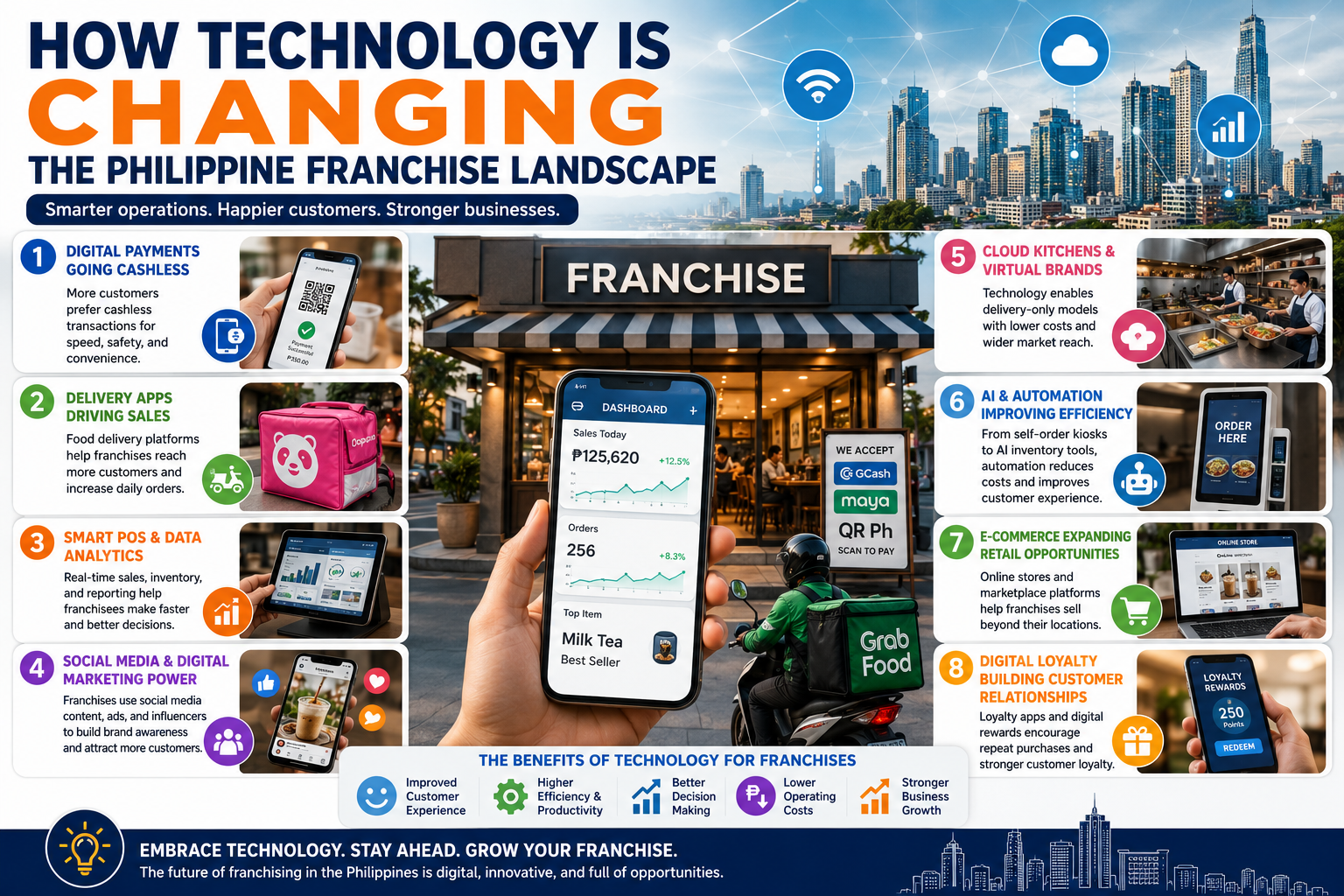
The Philippine franchise industry is evolving faster than ever—and technology is one of the biggest reasons why.
Years ago, franchising mainly depended on physical stores, walk-in customers, and traditional marketing. Today, technology influences almost every part of the business, from ordering systems and digital payments to customer engagement and delivery operations.
Whether it’s a small milk tea kiosk or a major fast-food chain, businesses that embrace technology are gaining a stronger competitive edge.
For franchise owners, adapting to these changes is no longer optional. It’s becoming essential for long-term growth and survival.
Here’s a closer look at how technology is transforming the Philippine franchise landscape.
1. Digital Payments Are Becoming the Standard

Cashless transactions are now part of daily life in the Philippines.
More consumers are using:
- GCash
- Maya
- QR Ph
- Credit and debit cards
- Contactless payments
For franchises, digital payments offer several advantages:
- Faster transactions
- Improved customer convenience
- Reduced cash handling risks
- Easier sales tracking
Even small food carts and kiosks are now accepting QR payments because customers increasingly expect cashless options.
As digital finance adoption continues to grow, franchises without cashless systems may struggle to keep up with customer expectations.
2. Food Delivery Apps Changed the Restaurant Industry

One of the biggest technological shifts in franchising came from food delivery platforms.
Apps like:
- GrabFood
- foodpanda
- Pick.A.Roo
have completely changed how food businesses operate.
Today, many restaurants earn a significant portion of their revenue through delivery orders instead of dine-in customers.
This shift has encouraged franchises to:
- Optimize packaging for delivery
- Create delivery-only menus
- Improve kitchen efficiency
- Expand into cloud kitchen models
Some businesses are even opening smaller stores because delivery now drives much of their sales.
For many franchises, online delivery is no longer just an extra service—it’s a core revenue channel.
3. POS Systems Are Improving Business Operations

Modern POS (Point-of-Sale) systems are doing much more than processing payments.
Today’s franchise businesses use POS technology for:
- Sales tracking
- Inventory management
- Employee monitoring
- Customer analytics
- Financial reporting
Instead of manually tracking everything, owners can now access real-time business data instantly.
This helps franchisees:
- Reduce waste
- Prevent inventory shortages
- Identify top-selling products
- Make faster business decisions
For multi-branch franchises, centralized systems also make operations easier to manage.
4. Social Media Is Driving Franchise Growth

Technology has changed marketing completely.
In the past, franchises depended heavily on:
- Flyers
- Print ads
- Billboards
Today, social media platforms such as:
- TikTok
play a major role in attracting customers.
A single viral video can significantly boost sales overnight.
Many franchises now invest in:
- Influencer collaborations
- TikTok-friendly food presentations
- Online promotions
- Social media advertising
Younger consumers especially discover brands through digital content rather than traditional advertising.
5. Cloud Kitchens Are Reshaping Food Franchising

Technology and delivery apps helped create a new business model: cloud kitchens.
These are delivery-focused kitchens without traditional dine-in areas.
Advantages include:
- Lower rental costs
- Smaller spaces
- Reduced staffing needs
- Faster expansion potential
Cloud kitchens are especially attractive in highly urbanized areas where delivery demand is high.
Some franchise brands now operate multiple virtual food concepts from a single kitchen to maximize profitability.
This trend is expected to continue growing in the coming years.
6. AI and Automation Are Slowly Entering the Industry

Artificial intelligence and automation are beginning to influence franchising as well.
Some businesses now use:
- Self-order kiosks
- Automated inventory forecasting
- AI-powered customer support
- Digital loyalty systems
Although large-scale automation is still developing in the Philippines, more franchises are exploring technology to:
- Improve efficiency
- Reduce labor costs
- Enhance customer experience
Over the next few years, AI tools may become much more common across retail and food franchises.
7. E-Commerce Is Expanding Retail Franchise Opportunities

Retail franchises are no longer limited to physical stores.
Many businesses now combine:
- Physical outlets
- Online stores
- Marketplace platforms
- Social commerce
Customers often browse products online before visiting stores, or purchase entirely through apps and websites.
Franchise businesses that integrate e-commerce effectively can:
- Reach more customers
- Increase convenience
- Expand beyond local foot traffic
This hybrid approach is becoming increasingly important in modern retail franchising.
8. Technology Is Making Franchises Easier to Manage Remotely

Technology is also changing how franchise owners manage their businesses.
With cloud-based tools, owners can now monitor:
- Daily sales
- Inventory levels
- Employee attendance
- Customer feedback
from almost anywhere.
This is especially useful for franchisees managing multiple branches or semi-passive businesses.
Instead of being physically present all the time, owners can use technology to maintain oversight and make faster decisions.
9. Customer Loyalty Programs Are Becoming More Digital

Traditional paper loyalty cards are gradually disappearing.
Many franchises now use digital rewards systems through:
- Mobile apps
- QR codes
- SMS-based promos
- Customer accounts
These systems help businesses:
- Encourage repeat purchases
- Collect customer data
- Send targeted promotions
- Build stronger customer relationships
For consumers, digital rewards are more convenient and easier to use.
10. Technology Is Creating More Competitive Franchise Businesses

Ultimately, technology is making the franchise industry:
- Faster
- Smarter
- More customer-focused
Businesses that embrace innovation are often better positioned to:
- Adapt to market and franchise trends
- Improve efficiency
- Reduce operating costs
- Increase customer satisfaction
Meanwhile, franchises that resist digital transformation may struggle to remain competitive.
The Philippine franchise landscape is becoming increasingly technology-driven—and this shift will likely accelerate over the next several years.
Final Thoughts
Technology is no longer just an “extra advantage” in franchising—it’s becoming a necessity.
From digital payments and delivery apps to cloud kitchens and AI systems, technology is reshaping how Philippine franchises operate and grow.
For franchise investors and entrepreneurs, the key takeaway is clear:
Businesses that adapt to changing technology trends are more likely to succeed in the long run.
The future of franchising in the Philippines will likely be defined by:
- Convenience
- Speed
- Automation
- Digital customer experiences
Whether you’re investing in food, retail, wellness, or service-based businesses, understanding these technological shifts can help you make smarter franchise decisions in the years ahead.