Franchising has become one of the most popular ways to start a business in the Philippines. Instead of building a brand from scratch, entrepreneurs can invest in a proven concept with established systems, marketing support, and recognizable branding.
However, one of the first decisions aspiring franchisees face is choosing between a food cart franchise and a full store franchise. Both options offer opportunities, but they differ significantly in startup cost, operations, space requirements, and potential profit.
Some well-known franchise brands in the country offer both formats, including Master Siomai, Potato Corner, Siomai King, and Jollibee.
In this guide, we’ll break down the key differences between food cart franchises and full store franchises in the Philippines, so you can decide which option fits your budget, lifestyle, and business goals.
What Is a Food Cart Franchise?
A food cart franchise is a small-scale food business usually located in high-traffic areas such as malls, transport terminals, schools, and office buildings. Instead of operating a full restaurant, franchisees sell a limited menu from a kiosk or cart.
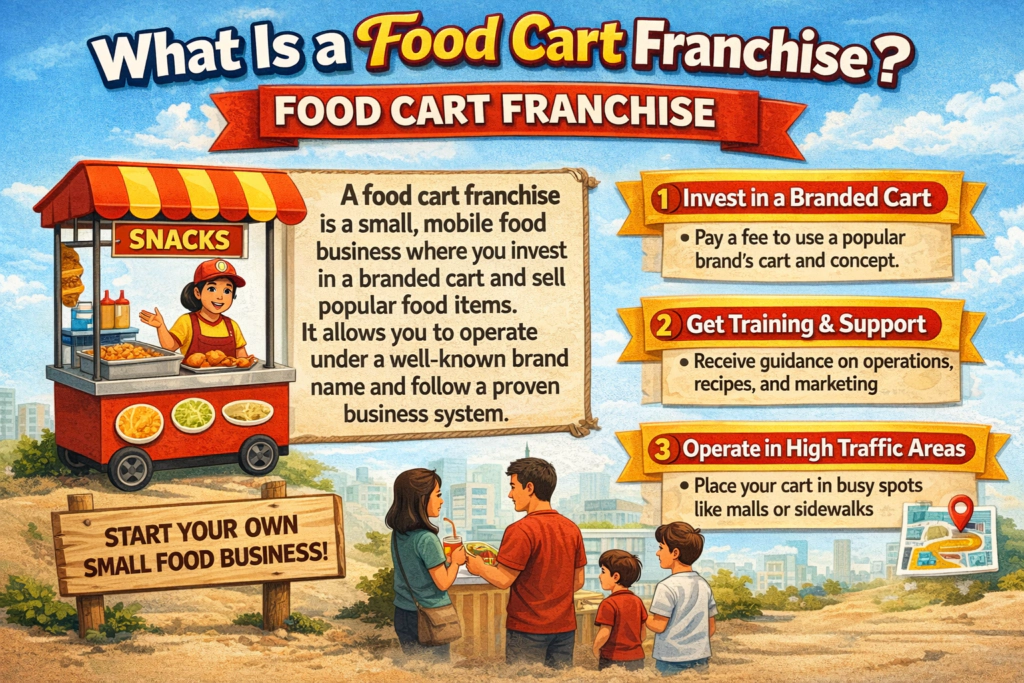
Popular food cart franchise brands include:
Food carts are often seen as entry-level franchise opportunities because they require less capital and are easier to operate.
Advantages of Food Cart Franchises
1. Lower Startup Cost
One of the biggest advantages of food cart franchises is affordability. Many options in the Philippines start at around ₱200,000 to ₱600,000, depending on the brand and location.
This makes them ideal for:
- First-time entrepreneurs
- OFWs returning home
- Small investors testing the franchising industry
2. Simpler Operations
Food cart businesses typically offer a small and focused menu. Because of this, operations are simpler and easier to manage.
In many cases, one or two staff members can run the entire cart.
3. Smaller Space Requirements
Food carts usually occupy 2 to 6 square meters of space, making them suitable for malls, transport hubs, and busy commercial areas.
This also means lower rental costs compared to traditional restaurant spaces.
4. Faster Setup
Because the structure and equipment are already standardized by the franchisor, food cart franchises can often be operational within a few weeks after approval.
What Is a Full Store Franchise?
A full store franchise is a larger, more traditional restaurant setup. These businesses typically have dine-in areas, full kitchens, multiple staff members, and a wider menu.
Some well-known examples in the Philippines include:
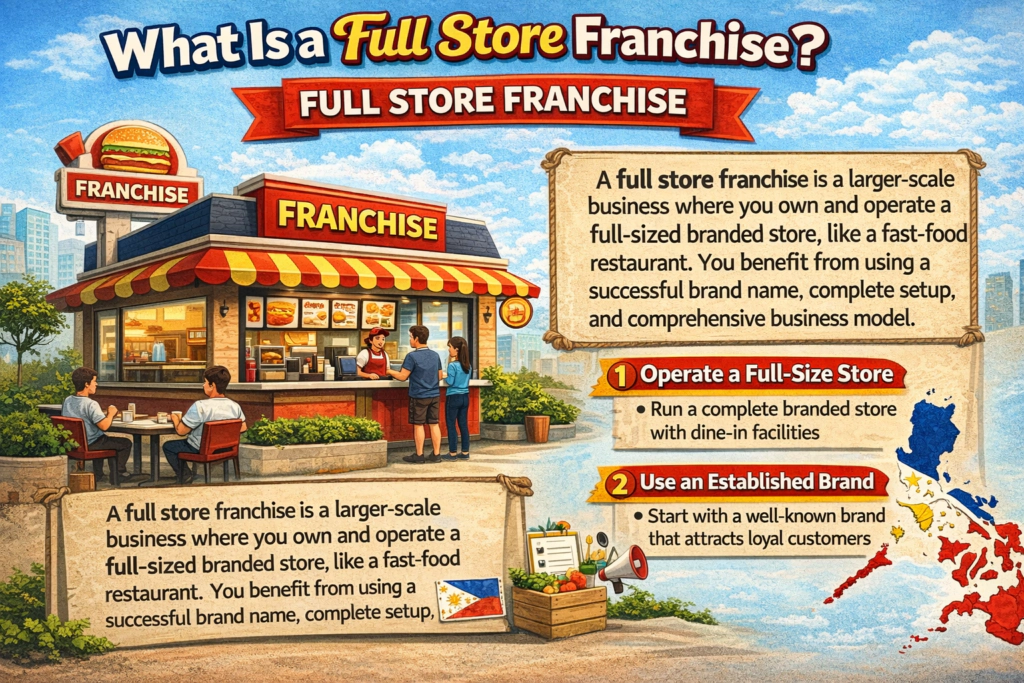
Full store franchises require much higher capital investment, but they also offer higher revenue potential.
Advantages of Full-Store Franchises
1. Higher Revenue Potential
Full store franchises can serve more customers at once, thanks to dine-in seating and larger kitchen operations.
Because they offer a wider menu, they can generate income from:
- dine-in customers
- takeout orders
- delivery services
2. Stronger Brand Visibility
Restaurants with physical storefronts often attract more attention and establish stronger brand recognition in the community.
For example, a large branch of Jollibee in a busy area can easily become a neighborhood landmark.
3. Larger Customer Base
Full restaurants attract different types of customers:
- families
- office workers
- group diners
- delivery customers
This diversity often leads to more consistent daily sales.
4. Long-Term Business Growth
Many franchise owners start with one store and eventually expand to multiple locations. Larger franchises often offer multi-unit opportunities for experienced operators.
Startup Cost Comparison
One of the biggest differences between the two franchise types is the required capital.
Food Cart Franchise Cost
Typical investment range:
- ₱200,000 – ₱600,000
- Includes cart setup, equipment, and initial inventory
Brands like Siomai King and Master Siomai fall within this range.
Full Store Franchise Cost
Typical investment range:
- ₱3 million – ₱35 million
Large restaurant brands like Jollibee require significantly higher capital due to:
- construction
- kitchen equipment
- furniture
- staffing
- inventory
The higher investment reflects the larger scale of operations.
Operations and Staffing
Another major difference lies in daily operations.
Food Cart Operations
Food cart businesses typically require:
- 1–2 staff members
- simple food preparation
- minimal equipment
For example, a kiosk for Potato Corner mainly focuses on preparing fries with different flavor powders.
Because of the simplicity, owners can often manage operations themselves.
Full Store Operations
Full store franchises involve more complex management, including:
- kitchen staff
- cashiers
- dining staff
- supervisors
A restaurant like Mang Inasal requires a larger team to handle food preparation, customer service, and dine-in operations.
Location Flexibility
Location plays a huge role in the success of a franchise.
Food Cart Locations
Food carts are commonly found in:
- shopping malls
- train stations
- school campuses
- office buildings
Because they require small spaces, they can be placed in high foot traffic areas.
Full Store Locations
Full store franchises require larger spaces such as:
- standalone commercial buildings
- mall restaurant spaces
- commercial strip areas
Location approval is usually stricter, especially for premium brands like Jollibee.
Profit Potential
Profit potential depends heavily on location, management, and brand strength.
Food Cart Earnings
Food carts generally have lower operating costs, which can lead to faster ROI.
Typical payback period:
1–2 years
However, revenue is limited by the cart’s small scale.
Full Store Earnings
Full restaurants can generate significantly higher revenue, but expenses are also higher.
Typical payback period:
3–5 years or more
Despite the longer timeline, successful stores can produce much larger long-term profits.
Which Option Is Better for New Entrepreneurs?
For first-time entrepreneurs, food cart franchises often provide a safer entry point.
They offer:
- lower financial risk
- simpler operations
- faster startup time
Many investors start with brands like Master Siomai or Potato Corner before moving into larger restaurant franchises later.
On the other hand, experienced investors with larger capital may prefer full store franchises for their stronger long-term growth potential.
Final Thoughts
Both food cart franchises and full store franchises offer exciting opportunities in the Philippine food industry. The right choice ultimately depends on your budget, experience, and business goals.
Food cart franchises are ideal for beginners who want to start small and learn the basics of franchising. They require less capital and are easier to manage.
Full store franchises, meanwhile, demand higher investment but offer greater revenue potential and stronger brand presence.
Before investing, take time to research different franchise brands, evaluate potential locations, and understand the operational requirements. With the right preparation, franchising can become a rewarding and profitable business venture in the Philippines.