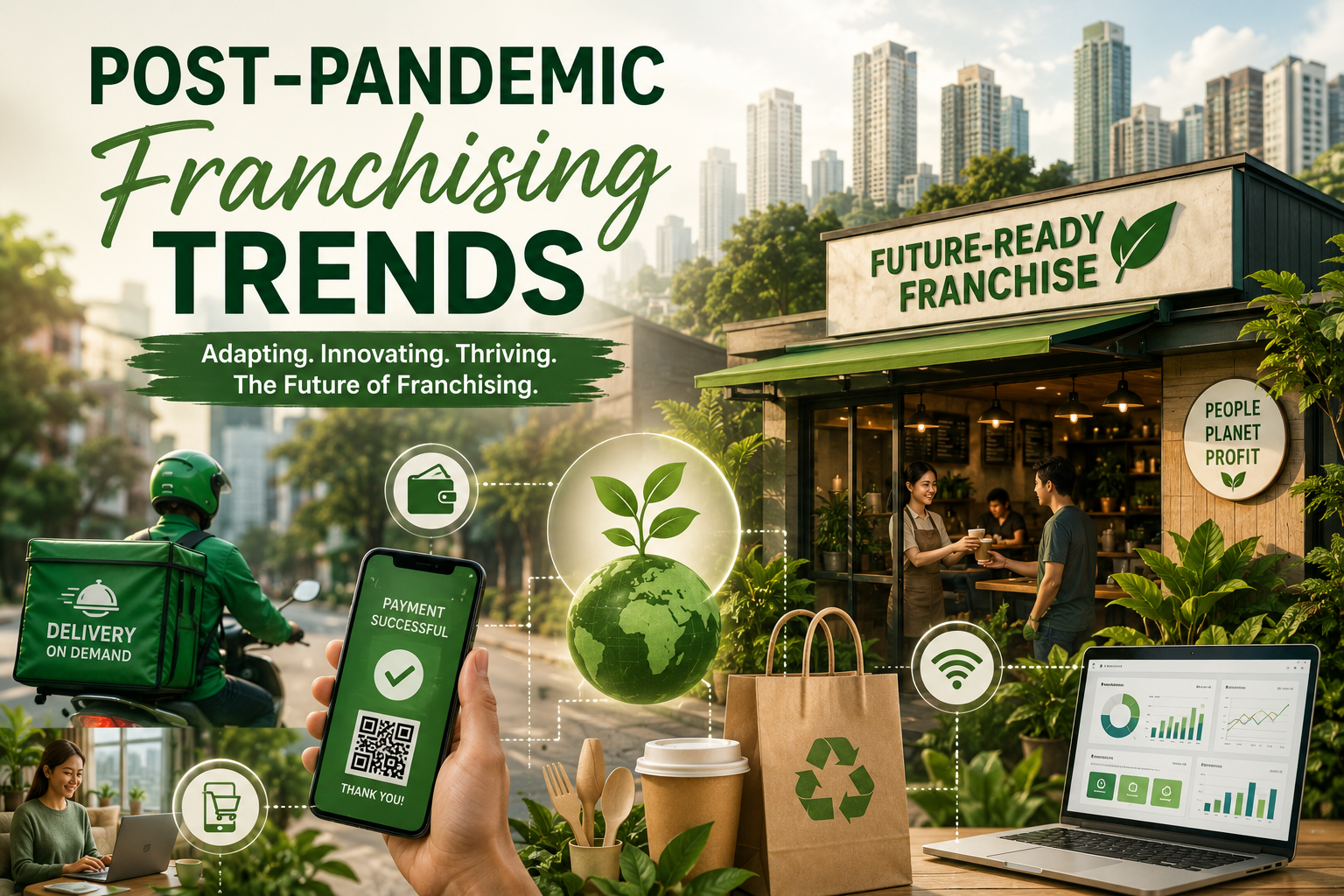
The franchise industry in the Philippines has undergone significant changes since the pandemic. While many businesses faced unprecedented challenges, the experience also accelerated innovation, reshaped consumer behavior, and created new opportunities for entrepreneurs.
Today, successful franchises look different from those that thrived before 2020. Customers have new expectations, technology plays a larger role in daily operations, and investors are placing greater emphasis on resilience and adaptability.
For aspiring franchise owners, understanding these shifts can help identify opportunities and avoid outdated business models.
Here are the most important post-pandemic franchising trends every investor should know.
1. Delivery and Takeout Are No Longer Optional

One of the biggest changes to emerge from the pandemic is the normalization of food delivery.
Before, delivery services were often viewed as an added convenience. Today, many consumers expect businesses to offer multiple ordering options.
Successful food franchises now prioritize:
- Delivery partnerships
- Mobile ordering
- Takeout-friendly packaging
- Online customer support
Many restaurant brands report that delivery continues to represent a significant portion of their revenue even after restrictions were lifted.
For investors, franchise concepts that are designed for both in-store and delivery sales often have a competitive advantage.
2. Smaller Store Formats Are Becoming More Popular

Large commercial spaces can be expensive to operate.
As a result, many franchisors have adapted by creating:
- Smaller stores
- Kiosks
- Grab-and-go outlets
- Modular concepts
These formats typically offer:
- Lower rent expenses
- Reduced staffing requirements
- Faster expansion opportunities
- Lower startup investments
For first-time franchisees, smaller concepts often provide a more manageable entry point into business ownership.
3. Consumers Prioritize Convenience More Than Ever

The pandemic permanently changed how people shop, eat, and access services.
Customers increasingly value:
- Faster transactions
- Contactless payments
- Easy ordering
- Flexible delivery options
Businesses that reduce friction and save customers time are often rewarded with stronger loyalty.
This trend extends beyond food businesses and affects retail, healthcare, education, and service franchises as well.
4. Digital Payments Have Become the New Standard

The adoption of cashless payments accelerated dramatically during the pandemic.
Today, many customers expect businesses to accept:
- GCash
- Maya
- QR Ph
- Credit cards
- Contactless payments
Digital payment systems offer benefits such as:
- Faster checkouts
- Improved security
- Better sales tracking
- Increased customer convenience
Franchises that embrace cashless transactions often provide a smoother customer experience.
5. Health and Wellness Businesses Are Growing

The pandemic heightened awareness of health and personal well-being.
As a result, demand has increased for:
- Fitness centers
- Wellness clinics
- Healthy food concepts
- Supplement retailers
- Skincare and self-care services
Consumers are investing more in preventive health and lifestyle improvements than ever before.
This has created strong growth opportunities for wellness-focused franchise concepts.
6. Essential-Service Franchises Attract More Investors
The pandemic reminded many investors of the value of recession-resistant businesses.
Franchises that provide everyday necessities often maintain demand even during economic uncertainty.
Examples include:
- Convenience stores
- Laundry services
- Water refilling stations
- Cleaning services
- Basic healthcare services
Many entrepreneurs now prioritize stability and recurring demand over trend-driven concepts.
7. Franchise Investors Are Doing More Research

Before the pandemic, some investors focused heavily on brand popularity.
Today, investors are paying closer attention to:
- Profit margins
- Franchise support systems
- Operating costs
- Break-even timelines
- Market demand
Prospective franchisees are increasingly:
- Comparing multiple brands
- Reviewing contracts carefully
- Speaking with existing franchisees
- Calculating ROI before investing
This trend has encouraged greater transparency across the franchise industry.
8. Hybrid Business Models Are Thriving

Many businesses are now combining physical and digital channels.
Examples include:
- Retail franchise stores with online ordering
- Restaurants with delivery apps
- Service businesses with online booking
- Educational centers with virtual programs
These hybrid models allow businesses to:
- Reach more customers
- Generate multiple revenue streams
- Adapt to changing consumer behavior
The ability to operate both online and offline has become a valuable competitive advantage.
9. Sustainability Is Becoming More Important

Consumers are increasingly supporting brands that demonstrate environmental responsibility.
Franchises are responding through:
- Sustainable packaging
- Reduced plastic usage
- Energy-efficient operations
- Waste reduction initiatives
While sustainability was once considered a niche concern, it is becoming a mainstream business consideration.
Businesses that align with these values may enjoy stronger customer loyalty in the years ahead.
10. Technology Is Driving Competitive Advantage

Technology now plays a central role in franchise success.
Modern businesses use digital tools for:
- Inventory management
- Sales analytics
- Customer relationship management
- Marketing automation
- Employee scheduling
Technology allows franchise owners to make faster, more informed decisions while improving operational efficiency.
As digital transformation continues, technology-driven franchises are likely to maintain a significant advantage.
What These Trends Mean for Future Investors

The post-pandemic franchise landscape is more dynamic than ever.
Successful investors are increasingly looking for businesses that offer:
- Operational flexibility
- Digital integration
- Strong support systems
- Sustainable growth potential
- Resilience during economic uncertainty
Rather than focusing solely on well-known brands, many entrepreneurs are evaluating how adaptable a franchise is to future market changes.
Final Thoughts
The pandemic changed the franchise industry in ways that continue to shape business decisions today.
Delivery services, digital payments, hybrid business models, wellness concepts, sustainability initiatives, and technology-driven operations have become essential parts of modern franchising.
For investors, understanding these trends can help identify franchise opportunities with stronger long-term potential.
The most successful franchises over the next decade will likely be those that combine convenience, technology, customer-centric experiences, and operational flexibility.
When evaluating a franchise opportunity, don’t just look at where the market has been—look at where it’s heading.
That’s often where the best opportunities are found.