Starting a franchise business is one of the most popular ways Filipinos enter entrepreneurship. Instead of building a brand from scratch, franchising gives you access to a proven business franchise model, established systems, and built-in customer trust.
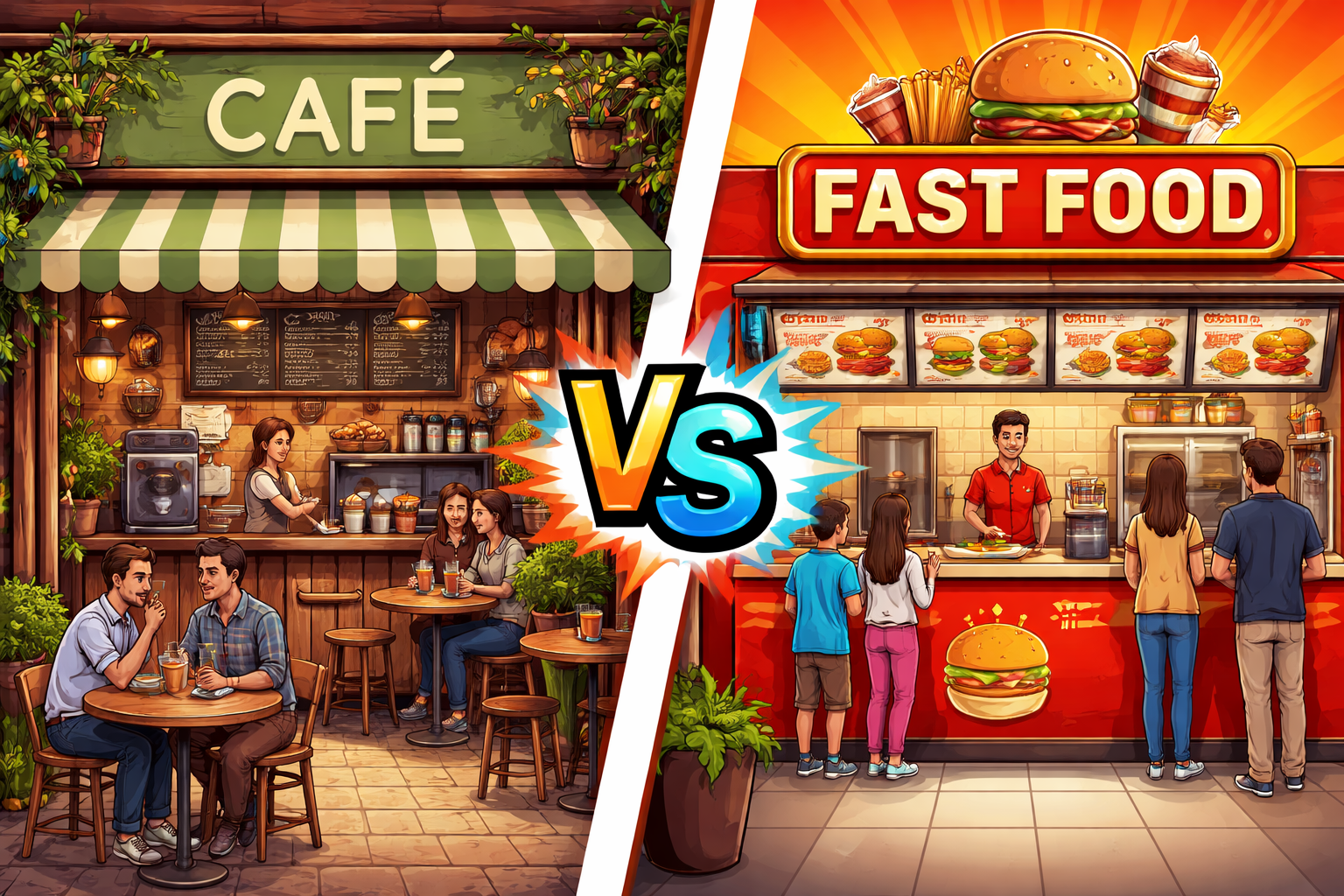
Two of the most common franchise options today are cafés and fast-food restaurants. Both belong to the thriving food and beverage industry, but they operate very differently in terms of costs, daily operations, and profit potential.
If you’re deciding between the two, it helps to understand how they compare in real-world conditions. Below is a practical comparison of café vs fast food franchises to help you determine which option might be more profitable for your situation.
Café Franchises
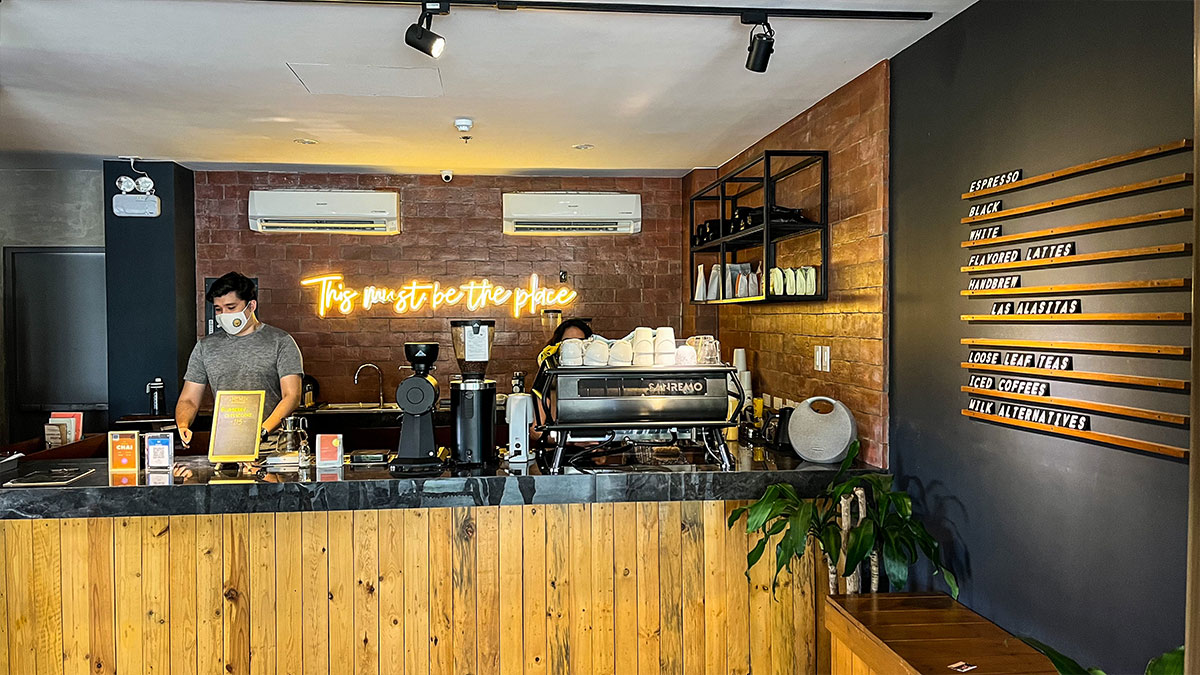
Cafés have exploded in popularity across the Philippines over the past decade. What used to be a luxury experience is now part of everyday life. Students study in cafés, freelancers work remotely from them, and friends often meet over coffee instead of fast food.
Because of this cultural shift, café franchises have become attractive investment options.
Startup Investment
Café franchises can range widely depending on the brand and store format. A small coffee kiosk may require ₱300,000 to ₱800,000, while a full café with seating and a full menu can cost ₱1 million to ₱5 million or more.
Equipment such as espresso machines, grinders, refrigerators, and display counters can account for a large portion of the startup cost.
Profit Margins
One of the biggest advantages of coffee businesses is high markup. A cup of coffee that costs ₱30–₱40 to produce may sell for ₱120–₱180.
That margin helps cafés generate good profits as long as they maintain steady customer traffic.
Many cafés also increase revenue through:
- Pastries and desserts
- Sandwiches or light meals
- Specialty drinks and seasonal menus
Customer Behavior
Coffee drinkers tend to become repeat customers. Once someone finds a café they like, they often visit multiple times a week.
However, cafés rely heavily on location and ambiance. A cozy environment, good lighting, and comfortable seating can significantly influence sales.
Operational Challenges
Running a café may appear simple, but there are still operational challenges, such as:
- Maintaining drink quality
- Training baristas
- Managing milk and pastry inventory
- Standing out in a competitive café market
Despite these challenges, cafés can be easier to manage than large food operations.
Fast Food Franchises

Fast-food franchises remain the backbone of the Philippine food service industry. Brands offering fried chicken, burgers, rice meals, and combo sets attract massive daily foot traffic.
Many people choose fast food because it’s quick, affordable, and convenient.
Startup Investment
Fast-food franchises typically require larger startup capital compared to cafés. Small food carts might start at around ₱500,000, but full restaurant concepts can range from ₱5 million to ₱30 million or more, depending on the brand.
Costs include:
- Commercial kitchen equipment
- Dining area furniture
- Exhaust and ventilation systems
- Franchise fees and training
Because of these higher requirements, fast-food franchises are usually suited for investors with larger budgets.
Revenue Potential
While fast-food items may have lower margins compared to coffee drinks, they make up for it through high sales volume.
A well-located fast-food store can serve hundreds of customers daily, especially in busy areas such as:
- Shopping malls
- Transportation hubs
- Commercial districts
- School zones
Combo meals, family bundles, and delivery orders help increase average customer spending.
Strong Brand Recognition
One of the biggest advantages of fast-food franchises is brand power. Well-known chains attract customers almost instantly after opening because people already trust the brand.
Marketing campaigns, national promotions, and product launches also help keep sales consistent.
Operational Complexity
Fast-food operations are usually more complex than cafés. Owners must manage:
- Larger staff teams
- Food preparation processes
- Inventory and storage
- Quality and speed of service
This means daily operations require stronger supervision and systems.
Profit Comparison: Café vs Fast Food

When comparing profitability, there isn’t a single answer that applies to every business. Instead, it depends on scale, location, and management efficiency.
Here’s a simplified comparison:
| Factor | Café Franchise | Fast Food Franchise |
|---|---|---|
| Startup Cost | Lower to moderate | Moderate to very high |
| Profit Margin | Higher per item | Lower per item |
| Sales Volume | Moderate | Very high |
| Operational Complexity | Moderate | High |
| Staffing Needs | Smaller team | Larger team |
In general:
- Cafés rely on higher product margins and repeat customers.
- Fast-food franchises rely on high daily sales volume.
A café might earn more profit per drink, but a busy fast-food restaurant could generate much higher total daily revenue.
Which Franchise Is Better for You?
Choosing between a café and a fast-food franchise depends on your capital, lifestyle, and management preference.
A café franchise may be better if you:
- Prefer a smaller team
- Have moderate startup capital
- Want a relaxed business environment
- Target students and remote workers
A fast-food franchise may be better if you:
- Have higher investment capital
- Want large daily sales volume
- Are comfortable managing bigger operations
- Prefer a well-established brand system
Final Thoughts
Both cafés and fast-food franchises can be profitable when managed properly. The key is choosing a concept that matches your resources and your local market.
Cafés benefit from high margins and strong repeat customers, while fast-food franchises rely on volume and brand power to drive revenue.
Before investing, take time to evaluate:
- Your budget
- Your preferred level of involvement
- Your location’s target market
- The franchise brand’s support system
With the right strategy and commitment, either option can become a successful and sustainable business in the Philippines.