Signing a franchise agreement is one of the most significant decisions for any aspiring entrepreneur. While owning a franchise can offer a ready-made business model, brand recognition, and ongoing support, it also comes with obligations, fees, and legal terms that can impact your long-term success. Asking the right questions before committing can save you from unexpected pitfalls and ensure you’re making a well-informed decision.
Below, we dive into the key questions you should ask before signing a franchise agreement.
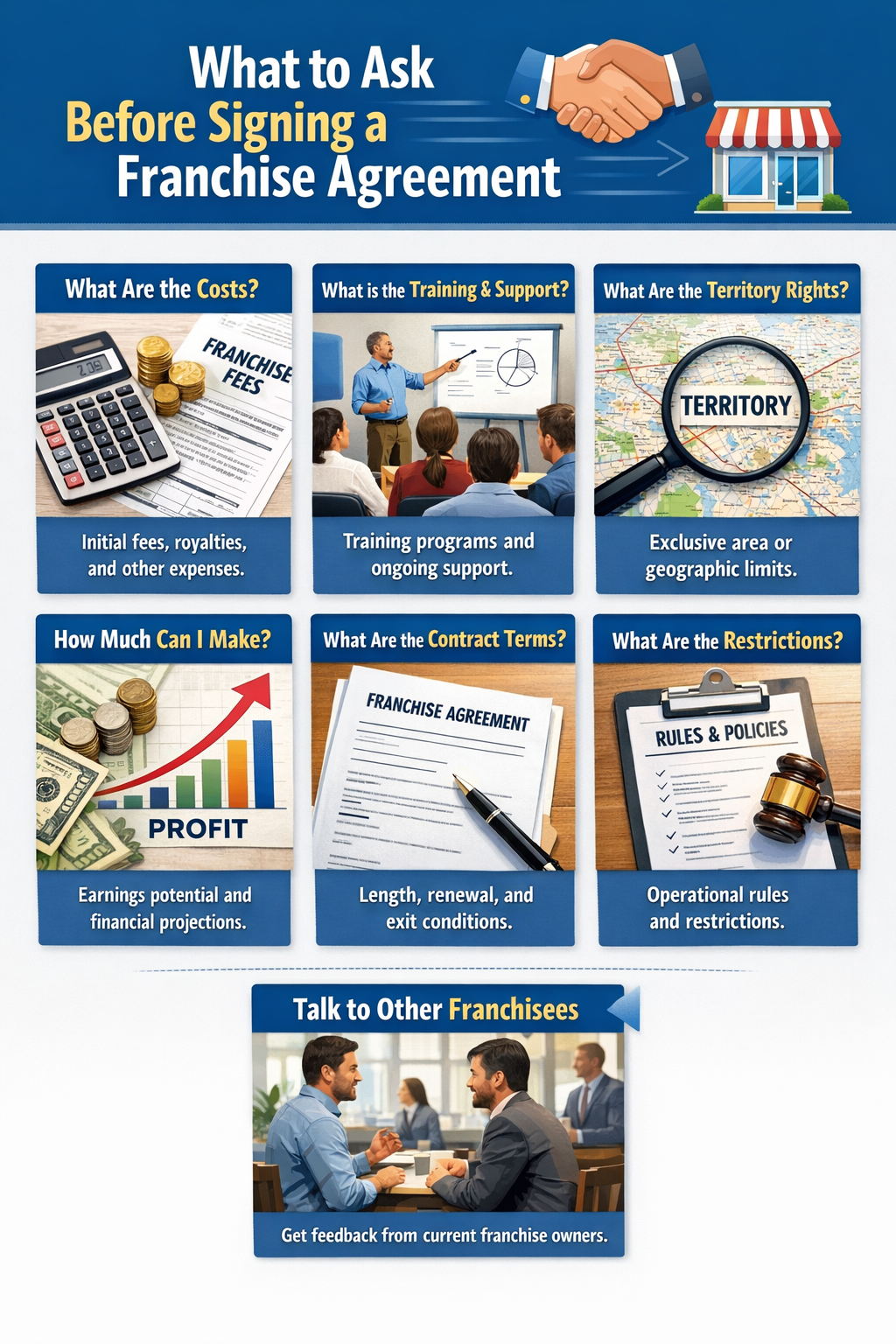
1. What Are the Total Costs Involved?

When considering a franchise, it’s crucial to understand the full financial commitment. Many prospective franchisees focus only on the initial franchise fee, but there are multiple costs to consider.
Key Questions to Ask:
- What is the initial franchise fee?
- Are there ongoing royalty fees? If so, how are they calculated?
- Are there advertising or marketing contributions?
- What are the estimated franchise setup costs (equipment, inventory, signage, and initial staff training)?
- Are there renewal fees after the initial franchise term?
Why It Matters:
Hidden costs can significantly affect your profitability. For instance, royalty fees are usually a percentage of your revenue, which means your earnings may be lower than expected if you don’t account for them.
2. What Kind of Support Will the Franchisor Provide?
One of the main advantages of buying a franchise is the support and guidance provided by the franchisor. But support levels vary widely between brands.
Key Questions to Ask:
- What type of initial training will I receive?
- Will there be ongoing training programs?
- Is support provided for marketing, operations, and staffing?
- Are there regular updates to the business model or products/services?
- How accessible is the franchisor if issues arise?
Why It Matters:
A franchisor who offers robust support can help you avoid common franchise mistakes and accelerate growth. Limited support, on the other hand, may leave you struggling to manage the business alone.
3. How Strong Is the Brand Reputation?

A franchise’s success often depends on the strength of its brand. A recognizable and trusted brand can attract customers more easily.
Key Questions to Ask:
- How long has the franchise been operating?
- What is the brand’s market share in the industry?
- Are there customer reviews or testimonials available?
- Have there been any lawsuits, complaints, or controversies associated with the brand?
Why It Matters:
A well-established brand with positive reputation reduces the risk of failure. Conversely, a franchise with negative publicity may require significant effort to overcome customer skepticism.
4. What Are the Territory Rights?
Territory rights are a critical aspect of a franchise agreement. Knowing whether your location is exclusive or shared can impact your revenue potential.
Key Questions to Ask:
- Is my territory exclusive?
- Can the franchisor open another franchise nearby?
- How are territories defined (zip codes, cities, or regions)?
- What is the process if I want to expand into a new territory?
Why It Matters:
Exclusive territory rights protect you from direct competition from other franchisees within the same brand, ensuring your investment isn’t undermined.
5. What Are the Contract Terms and Renewal Options?

Franchise agreements are legally binding documents, often spanning several years. Understanding the terms upfront is critical.
Key Questions to Ask:
- What is the length of the franchise agreement?
- Are there options to renew? If so, under what conditions?
- What happens if I want to sell or transfer the franchise?
- Are there penalties for early termination?
Why It Matters:
Knowing the duration and flexibility of the contract ensures that you’re not locked into unfavorable terms that could limit your business opportunities in the future.
6. What Are the Earnings and Profitability Expectations?
Understanding potential revenue and profitability is essential. While franchisors often provide financial projections, it’s important to verify them independently.
Key Questions to Ask:
- Can I review the Franchise Disclosure Document (FDD) and financial performance representations?
- What are the average sales and net profit margins of existing franchisees?
- Are there seasonal fluctuations or market risks?
- What is the break-even timeline for a typical franchise location?
Why It Matters:
Financial clarity helps you set realistic expectations and secure appropriate financing. Avoid relying solely on the franchisor’s projections; seek input from current franchisees.
7. Can I Speak with Existing Franchisees?
Existing franchisees provide the most honest insights about the franchisor and business operations.
Key Questions to Ask:
- Can I contact current franchisees to discuss their experience?
- What challenges have they faced?
- How profitable are their locations compared to the projections?
- How responsive is the franchisor to support requests?
Why It Matters:
Hearing real-world experiences can reveal hidden issues, such as management support gaps, unexpected costs, or local market challenges.
Image Suggestion:
Photo of a group of franchisees in a discussion or a testimonial quote graphic.
8. What Are the Marketing and Advertising Expectations?
Franchises often require contributions to national or regional marketing funds. It’s important to understand how marketing is handled.
Key Questions to Ask:
- Is there a mandatory advertising fund contribution? If yes, how much?
- Can I run local marketing campaigns independently?
- How are marketing materials and strategies provided?
- What has been the ROI of past marketing campaigns?
Why It Matters:
Effective marketing is key to customer acquisition. You need to know whether the franchisor provides enough support or if you’ll need to supplement it with your own efforts.
9. What Are the Operational Standards and Restrictions?
Franchises often impose strict operational guidelines to maintain brand consistency. It’s essential to know what is expected of you.
Key Questions to Ask:
- Are there standardized operational procedures to follow?
- What are the rules regarding suppliers, inventory, and pricing?
- Are there restrictions on hours of operation or business offerings?
- What happens if I fail to comply with operational standards?
Why It Matters:
Operational guidelines ensure consistency but may limit flexibility. Understanding these restrictions helps you assess whether you’re comfortable with them.
10. What Legal and Regulatory Considerations Apply?
Franchises operate under various legal and regulatory requirements. Being aware of these is critical to avoid fines or legal complications.
Key Questions to Ask:
- Does the franchisor comply with local business and labor laws?
- Are there any ongoing lawsuits or disputes?
- Who is responsible for licenses, permits, and insurance?
- Are there any restrictions imposed by government regulations?
Why It Matters:
Legal compliance protects your investment and ensures that your business operates smoothly within the law.
11. What Exit Strategies Are Available?
Even the best franchise might not work out for every entrepreneur. Understanding your exit options is crucial.
Key Questions to Ask:
- Can I sell my franchise if I choose to exit?
- Are there restrictions on who I can sell it to?
- Is there a buyback option from the franchisor?
- What are the financial consequences of closing the franchise early?
Why It Matters:
Having a clear exit strategy gives you flexibility and reduces financial risk if the business doesn’t meet expectations.
12. How Do I Evaluate the Franchisor’s Long-Term Vision?
Finally, it’s important to consider whether the franchisor’s long-term goals align with yours.
Key Questions to Ask:
- What is the growth strategy for the brand in the next 5–10 years?
- Are there plans for new products, services, or markets?
- How does the franchisor handle innovation and competition?
- What is the track record for adapting to market changes?
Why It Matters:
A franchisor with a clear and realistic long-term strategy ensures that your investment has growth potential and resilience in changing markets.
Conclusion
Signing a franchise agreement is a major commitment. By asking the right questions about costs, support, brand strength, territory, contract terms, profitability, and long-term strategy, you can make a more informed decision. Always consult with legal and financial advisors, review the Franchise Disclosure Document carefully, and speak with existing franchisees.
Taking the time to ask the right questions will not only protect your investment but also set you on the path to a successful and sustainable franchise business.