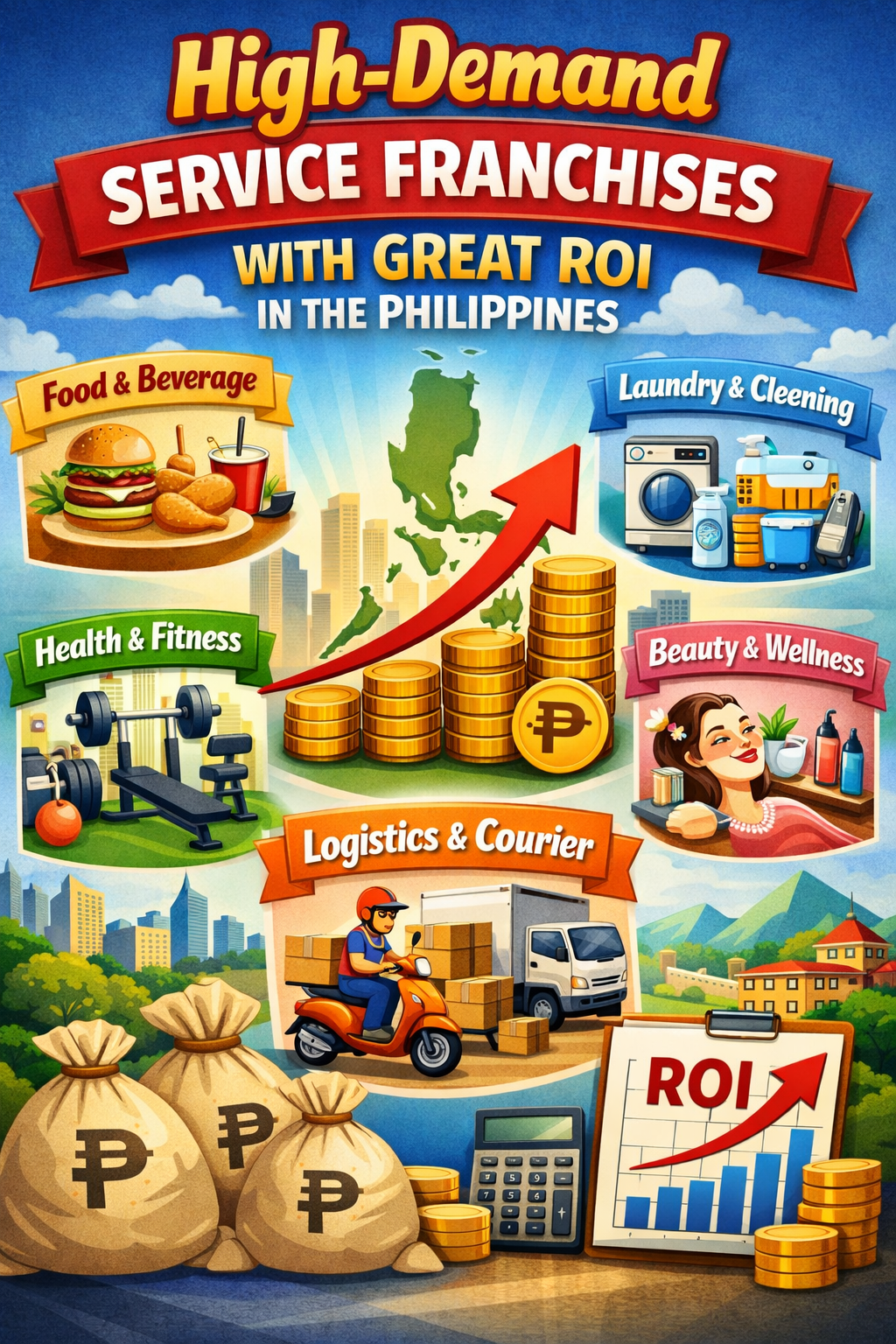
In the Philippines, franchise conversations are often dominated by milk tea shops, fried chicken kiosks, and café concepts. But if you look beyond food, you’ll find that some of the most stable and scalable opportunities are in service-based franchises.
Why? Because services solve daily, unavoidable problems. They don’t expire, they don’t depend heavily on foot traffic, and many operate on recurring contracts or memberships. In a growing economy like the Philippines—with expanding urban areas, rising middle-class income, and a young population—service franchises can offer strong long-term ROI.
Here’s a closer look at high-demand service franchises that make sense in the Philippine market.
1. Cleaning and Sanitation Services

From Metro Manila to emerging provincial cities, commercial and residential cleaning services remain in high demand.
With the growth of BPO offices, condominiums, malls, and private clinics, sanitation is no longer optional—it’s a business requirement.
Why It’s High-Demand in the Philippines
- Rapid condo developments in cities like Manila, Cebu, and Davao
- Expansion of office spaces and coworking hubs
- Higher hygiene awareness post-pandemic
- Busy dual-income households are outsourcing home cleaning
Many property managers prefer outsourcing cleaning to professional providers rather than hiring in-house staff. That opens doors for franchise owners to secure long-term contracts.
ROI Potential
Cleaning franchises usually have lower capital requirements compared to food businesses. You don’t need a prime mall location. Operations can start small and scale as contracts grow.
Monthly janitorial contracts create predictable income. Once you lock in several commercial clients, revenue becomes more stable—allowing you to reinvest and expand teams gradually.
2. Education and Tutorial Centers

Filipino families place a high value on education. Parents are willing to invest in enrichment programs, especially in competitive academic environments.
International brands like Kumon have strong presence locally, alongside many homegrown tutorial franchises.
Why It’s High-Demand in the Philippines
- Competitive entrance exams for top universities
- K–12 academic requirements
- Parents seeking advanced math and English programs
- Growing homeschooling and blended learning setups
In many communities, tutorial centers thrive through word-of-mouth referrals. Once parents see improvement in their children’s grades, loyalty follows.
ROI Potential
Education franchises typically require moderate commercial space in community areas. Overhead is manageable, and instructors can be hired part-time depending on enrollment.
Students usually enroll on a monthly basis, creating recurring revenue. High retention rates improve margins over time. In densely populated cities, demand can be strong enough to sustain multiple branches.
3. Fitness and Wellness Services

Health awareness is rising across the country. More Filipinos are investing in gym memberships, yoga studios, therapy clinics, and wellness programs.
Global brands like Anytime Fitness have expanded aggressively in major Philippine cities, proving the strength of the membership model.
Why It’s High-Demand in the Philippines
- Increasing lifestyle-related health concerns
- Growing middle-class spending power
- Social media influence promoting fitness culture
- Corporate wellness programs
Young professionals, in particular, prioritize convenience—choosing gyms near home or work.
ROI Potential
While initial investment may include equipment and interior fit-outs, membership-based income creates a predictable monthly cash flow.
Retention is key. If you build a strong fitness community and maintain high service quality, members often stay long-term. Additional revenue streams—like personal training, supplements, and group classes—can further increase profitability.
4. Home Repair and Maintenance Services

With rapid housing development across Luzon, Visayas, and Mindanao, home maintenance services are more necessary than ever.
Air-conditioning cleaning alone is a booming service due to the country’s tropical climate.
Brands such as Mr. Handyman demonstrate how structured home repair systems can scale effectively.
Why It’s High-Demand in the Philippines
- Frequent air conditioning maintenance needs
- Plumbing and electrical issues in growing subdivisions
- Busy homeowners prefer professional service
- Rising condominium occupancy
Many homeowners lack trusted service providers. A reliable, branded franchise immediately builds credibility.
ROI Potential
This category doesn’t require expensive storefronts. Most operations are mobile-based, reducing rental costs.
As demand grows, scaling is simple—add more technicians and service vehicles. Because services are essential, repeat customers and referrals drive sustainable income.
5. Recruitment and Staffing Services

The Philippines has a strong BPO sector, expanding startups, and a growing SME landscape. Businesses continuously hire—and many outsource recruitment.
International models like Express Employment Professionals showcase how staffing franchises can thrive.
Why It’s High-Demand in the Philippines
- High employee turnover rates
- Expanding outsourcing and BPO industries
- Demand for specialized tech and healthcare roles
- Overseas employment recruitment opportunities
Recruitment is relationship-driven. Strong business development and networking skills are key to success.
ROI Potential
This franchise model has minimal physical asset requirements. No inventory. No expensive equipment.
Revenue typically comes from placement fees or contract staffing percentages. A few large corporate clients can generate significant recurring revenue.
6. Senior Care and Home Healthcare

While Filipino culture traditionally values family-based elder care, modern realities are shifting. Many families now have both spouses working—or relatives living abroad.
Franchises like Home Instead have proven the viability of professional in-home care services.
Why It’s High-Demand in the Philippines
- Increasing life expectancy
- OFW families needing reliable local caregivers
- Growing acceptance of professional home care services
- Demand for post-hospital recovery support
Trust is everything in this sector. Families seek reliable, compassionate, and trained caregivers.
ROI Potential
Senior care often involves long-term service contracts, providing recurring income. Although regulatory compliance and staff training are critical, consistent demand makes this a strong long-term opportunity.
It’s also one of the few franchise categories that combines meaningful social impact with financial returns.
Why Service Franchises Make Sense in the Philippine Market
Compared to food franchises, service businesses often offer:
- Lower capital requirements
- Reduced risk of spoilage or waste
- Recurring income models
- Less dependence on mall foot traffic
- Easier scalability
In a developing but rapidly urbanizing economy like the Philippines, these advantages matter. Service-based franchises can be more resilient during economic fluctuations because they address everyday needs.
Final Thoughts
High-demand service franchises in the Philippines present a practical and strategic path to strong ROI. Whether you’re an OFW planning to invest back home or a local entrepreneur seeking stable income, service franchises offer scalability and sustainability.
The key is due diligence:
- Study your local market demand
- Review franchise agreements carefully
- Talk to existing franchisees
- Prepare conservative financial projections
When chosen wisely and managed properly, a service-based franchise can grow from a modest operation into a long-term wealth-building business.