Franchising is often marketed as a “plug-and-play” business model, step in, follow the system, and start earning. But while franchising can reduce many startup risks, it doesn’t eliminate all costs. In fact, many first-time franchisees are surprised by expenses that are not clearly highlighted during initial discussions.
If you’re planning to invest in a franchise, understanding the hidden costs is just as important as knowing the franchise fee. These costs can significantly affect your ROI, cash flow, and break-even timeline.
Below is a clear breakdown of the hidden expenses every future franchise owner should prepare for.
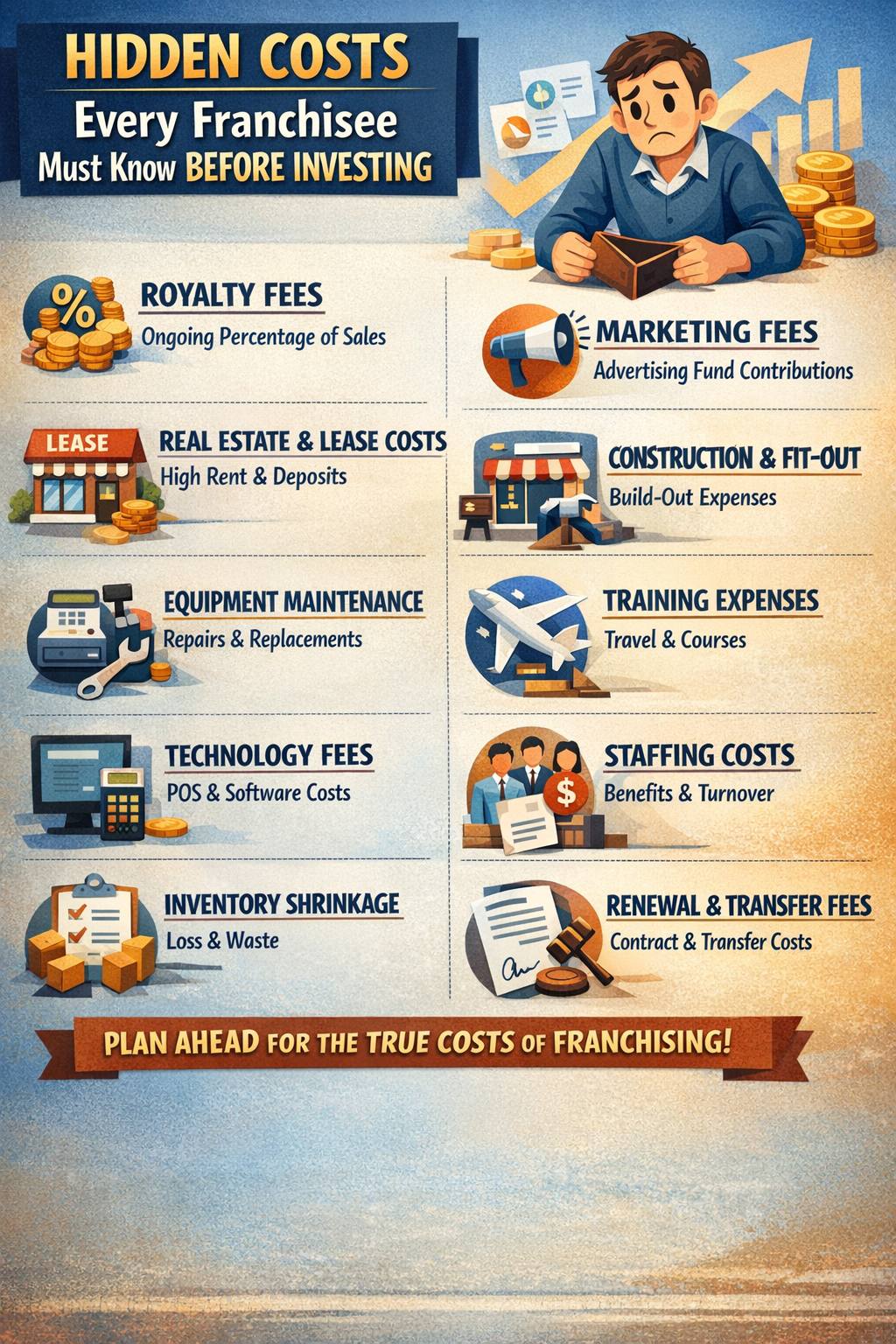
1. Royalty Fees That Never Stop

Most franchises charge ongoing royalty franchise fees, typically a percentage of your monthly gross sales.
While this is usually disclosed upfront, what many franchisees underestimate is how it impacts long-term profitability.
- Usually ranges from 4% to 15% of gross sales
- Paid whether you are profitable or not
- Can significantly reduce net income during slow months
Tip: Always calculate your “real take-home profit” after royalties, not before.
2. Marketing and Advertising Contributions

Franchisors often require franchisees to contribute to a marketing fund.
This may include:
- National or regional advertising campaigns
- Digital marketing efforts run by the franchisor
- Brand awareness campaigns
While beneficial for brand growth, these fees are often:
- Mandatory monthly contributions
- Separate from your local marketing spend
- Not directly tied to your store’s performance
Tip: Ask how marketing funds are allocated and whether you get local marketing support.
3. Real Estate and Lease Costs

One of the biggest hidden expenses in franchising is location-related costs.
Even if the franchisor helps you choose a site, you are responsible for:
- Advance rental deposits (often 2–6 months)
- Security deposits
- Monthly rent escalation clauses
- Renovation and fit-out requirements
Prime locations can dramatically increase your capital requirement.
Tip: Always factor in at least 6–12 months of rent buffer in your budget.
4. Construction, Fit-Out, and Design Fees

Franchises typically require strict brand compliance in store design.
This includes:
- Store layout construction
- Signage and branding materials
- Equipment installation
- Interior design standards
Even if you already have a space, converting it to franchise standards can cost more than expected.
Tip: Ask for a “turnkey cost estimate,” not just franchise fees.
5. Equipment Replacement and Maintenance
Many franchisees assume equipment is a one-time cost. In reality:
- Machines wear out faster under commercial use
- Maintenance contracts may be required
- Upgrades may be mandated by the franchisor
Examples include coffee machines, fryers, POS systems, and refrigeration units.
Tip: Budget for periodic replacements every 2–5 years, depending on the business type.
6. Training and Travel Expenses
Franchisors usually provide training, but not always for free, in every aspect.
Hidden training-related costs may include:
- Travel and accommodation for training sessions
- Paid training for additional staff
- Certification or compliance programs
- Ongoing refresher courses
Tip: Clarify whether training costs cover only the owner or all key staff.
7. Technology and System Fees
Modern franchises rely heavily on centralized systems, such as:
- Point-of-sale (POS) systems
- Inventory management tools
- CRM and reporting dashboards
These often come with:
- Monthly software subscriptions
- System upgrade fees
- Hardware replacement costs
Tip: Ask for a full breakdown of “tech stack” costs before signing.
8. Staffing Costs Beyond Salaries
Labor is one of the most underestimated expenses.
Beyond basic salaries, consider:
- Government-mandated benefits
- Overtime pay
- Training new hires due to turnover
- Incentives and retention bonuses
High staff turnover can significantly increase operating costs.
Tip: Build a staffing buffer into your monthly cash flow projections.
9. Inventory Shrinkage and Waste
Especially in food and retail franchises, inventory loss is real.
This includes:
- Spoilage of perishable goods
- Theft or pilferage
- Over-ordering or poor forecasting
Even strong franchises experience 2–10% inventory loss depending on operations.
Tip: Strong inventory control systems can reduce hidden losses significantly.
10. Renewal and Transfer Fees
Franchise agreements are not forever.
At some point, you may need to:
- Renew your contract (with a renewal fee)
- Pay legal and administrative costs
- Upgrade store standards before renewal
- Pay transfer fees if selling the franchise
Tip: Always read the renewal clause carefully—it can be expensive.
Final Thoughts
Investing in a franchise can be a smart business move, but only if you fully understand the total cost of ownership. The biggest mistake new franchisees make is focusing only on the franchise fee and ignoring ongoing and hidden expenses.
Before signing any agreement, make sure you:
- Request a full cost breakdown (not just initial investment)
- Ask for real-world profit margins from existing franchisees
- Review all operational and compliance fees
- Calculate worst-case cash flow scenarios
A successful franchise is not just about choosing the right brand—it’s about being financially prepared for everything that comes after the launch.