The way Filipinos work has changed dramatically over the past few years. Remote work, freelancing, online businesses, and hybrid work arrangements have become part of everyday life, creating new opportunities for entrepreneurs who want greater flexibility. As a result, many aspiring business owners are looking for franchises that don’t require managing a large storefront or spending long hours on-site.
While traditional franchises such as restaurants and retail stores still require physical locations, many franchise models today offer flexible operations that allow owners to manage significant parts of the business from home. Thanks to cloud-based systems, online ordering, digital marketing, and delivery services, franchise owners can oversee daily operations remotely while maintaining profitability.
If you’re looking for a business that offers greater work-life balance without sacrificing growth potential, here are some of the best franchise opportunities with flexible work-from-home options.
Why Flexible Franchise Models Are Growing

Modern technology has transformed how franchise businesses operate.
Today, many franchise systems offer:
- Cloud-based management platforms
- Mobile point-of-sale systems
- Online customer support
- Digital inventory tracking
- Delivery integrations
- Remote employee scheduling
These tools allow franchise owners to monitor sales, communicate with staff, review reports, and manage operations from virtually anywhere with an internet connection.
For many investors, this flexibility makes entrepreneurship more accessible than ever.
Benefits of Work-From-Home Franchise Opportunities

Flexible franchise models offer several advantages.
Better Work-Life Balance
Owners can spend more time with family while still overseeing business operations.
Lower Daily Travel
Less commuting saves both time and transportation expenses.
Easier Business Monitoring
Many franchisors provide mobile applications that allow owners to track sales and operations remotely.
Scalability
Managing multiple locations becomes easier when systems are cloud-based.
Business Continuity
Remote access allows owners to continue managing the business even while traveling.
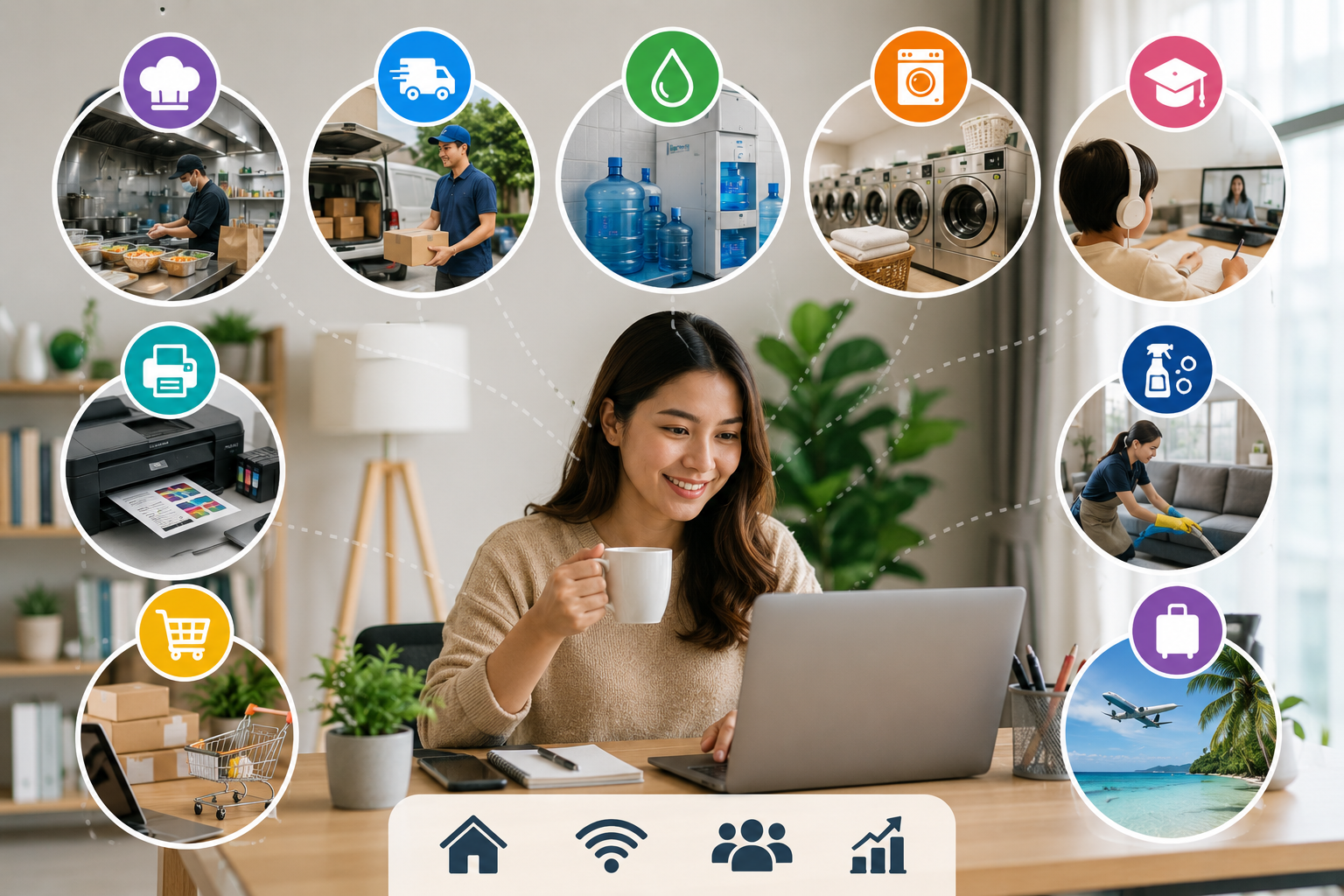
1. Delivery-Only Food Franchises

Cloud kitchens and delivery-focused franchise restaurants have grown rapidly in the Philippines.
These businesses primarily serve customers through delivery apps rather than dine-in service.
Owners often manage:
- Sales reports
- Inventory
- Staff schedules
- Marketing campaigns
using online platforms while kitchen staff handle food preparation.
This model reduces the need for large dining spaces and lowers operating costs.
2. Parcel and Logistics Franchises

The continued growth of e-commerce has created strong demand for courier and logistics businesses.
Many franchise owners spend most of their time managing:
- Delivery performance
- Customer inquiries
- Financial reports
- Staff coordination
through online systems.
Field personnel and delivery riders handle the operational side of the business.
3. Water Refilling Station Franchises

Water refilling stations provide an essential service that generates recurring demand.
Once trained staff are in place, owners can often monitor:
- Daily sales
- Delivery schedules
- Inventory
- Equipment maintenance
without being physically present throughout the day.
Many customers also place repeat orders through phone calls or online messaging.
4. Laundry Franchises

Laundry businesses have become increasingly automated.
Modern systems allow owners to remotely monitor:
- Machine usage
- Customer transactions
- Sales performance
- Staff attendance
Pickup and delivery services further enhance convenience for customers while reducing the owner’s need for constant on-site supervision.
5. Digital Printing and Business Services

Many printing businesses now accept orders online.
Customers upload files digitally before picking up finished products or requesting delivery.
Owners can often oversee:
- Online quotations
- Customer service
- Order management
- Marketing
from home while production staff complete the printing work.
6. Educational and Tutorial Franchises

Many educational franchises now combine face-to-face instruction with virtual learning.
Owners may manage:
- Student enrollment
- Class scheduling
- Marketing
- Parent communication
through digital platforms.
Hybrid learning models have expanded business opportunities while increasing operational flexibility.
7. Cleaning and Home Service Franchises

Cleaning service franchises typically dispatch trained personnel directly to customers.
Owners primarily coordinate:
- Bookings
- Staff schedules
- Customer support
- Billing
using cloud-based systems.
Because technicians travel to customer locations, business owners often spend little time at a physical office.
8. E-Commerce and Retail Franchises

Some retail franchises now emphasize online sales alongside physical distribution.
Owners can manage:
- Product listings
- Inventory
- Marketing campaigns
- Customer service
using e-commerce platforms.
Growing online shopping habits continue to support this business model.
9. Travel and Ticketing Franchises

As travel demand rebounds, many booking services operate largely online.
Owners often assist customers through:
- Video consultations
- Messaging apps
- Online booking systems
- Digital payments
This creates opportunities for flexible work arrangements while serving clients nationwide.
10. Business Consultancy and Financial Service Franchises

Certain financial service franchise systems focus on professional services rather than retail operations.
Examples include:
- Business consulting
- Tax assistance
- Insurance support
- Accounting services
- Financial advisory
Many client meetings can now be conducted virtually, allowing owners to work from home while serving customers across different locations.
Who Should Consider a Flexible Franchise?
Flexible franchise opportunities are ideal for:
Working Professionals
Those who want to build a business while maintaining full-time employment.
Parents
Entrepreneurs seeking more time with their families.
Overseas Filipino Workers (OFWs)
Investors who want to monitor their businesses remotely while working abroad.
Retirees
Business owners who prefer less physically demanding operations.
Multi-Unit Franchise Owners
Those managing several branches through centralized systems.
Tips Before Investing
Before choosing a flexible franchise, evaluate the following:
- How much of the business can genuinely be managed remotely?
- Does the franchisor provide cloud-based management tools?
- Can staff operate independently with proper training?
- What level of support does the franchisor offer?
- Is there reliable technology for monitoring operations?
- How will customer service be maintained when you’re not on-site?
The more efficient the franchise system, the easier it will be to manage your business from home.
Final Thoughts
Flexible work-from-home franchise opportunities are becoming increasingly popular in the Philippines as technology reshapes how businesses operate. From cloud kitchens and courier services to laundry businesses, tutorial centers, cleaning services, and digital retail, many franchise models now allow owners to manage key aspects of their operations remotely.
While no franchise is entirely “hands-off,” choosing a business with strong operational systems, reliable staff, and robust digital tools can provide greater flexibility without compromising profitability.
For entrepreneurs seeking a better balance between business ownership and personal life, investing in a franchise with remote management capabilities can be a smart and future-ready decision.